
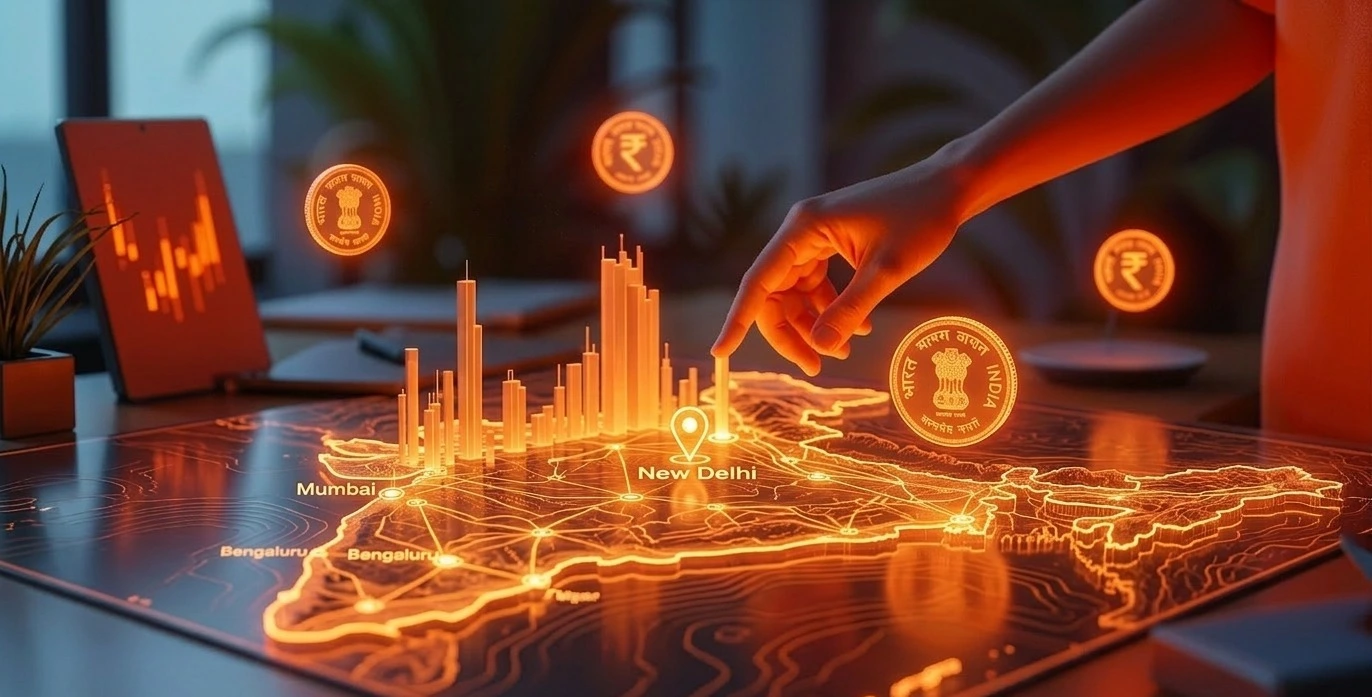
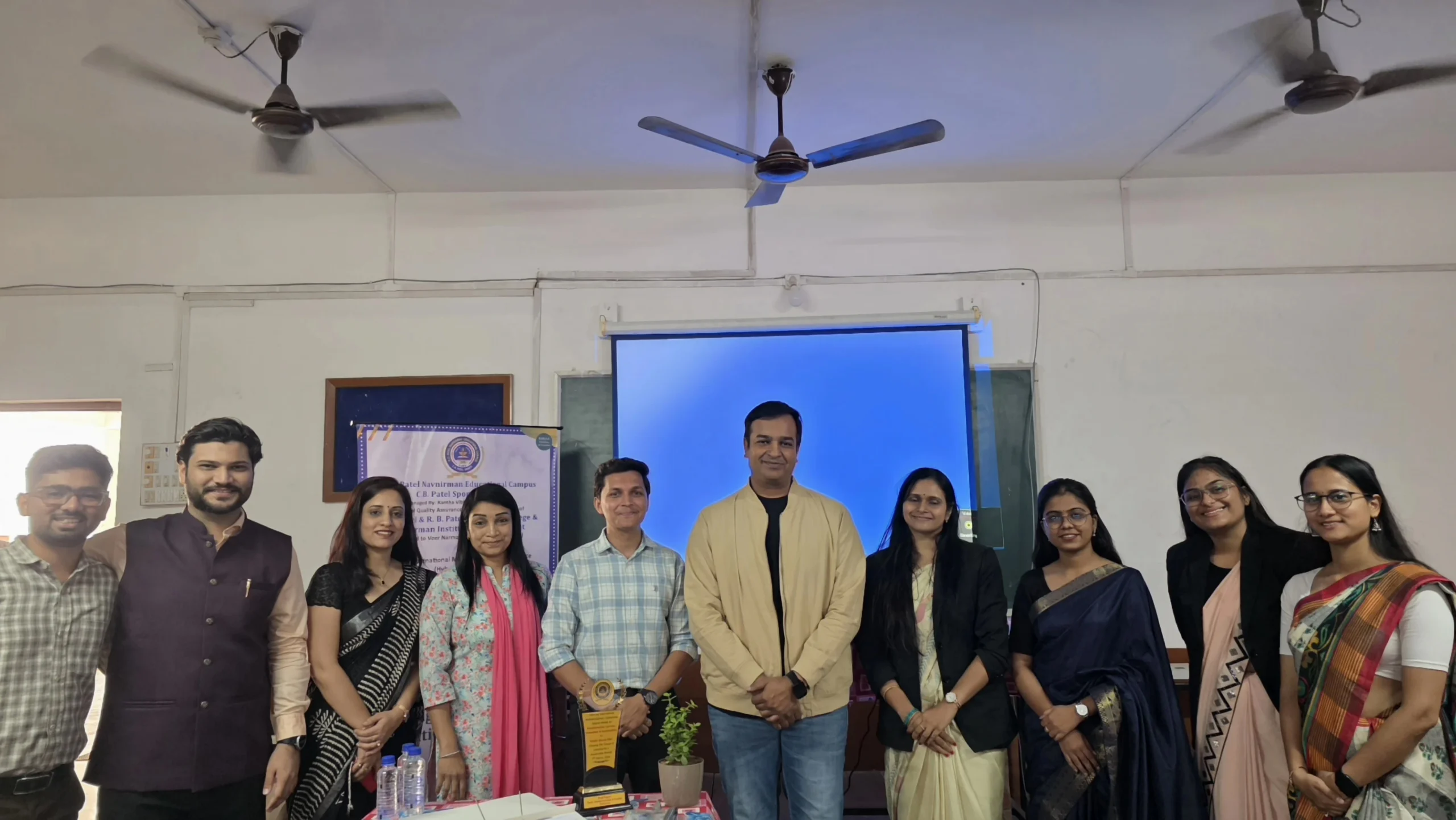
Recently, I was invited as a session chair for the track on the orange economy and creative industry at an international conference hosted by a college.
There was a lot of optimism in the discussions.
Students wanted to know where the future was heading. Academicians were exploring how creativity, innovation and industry are coming closer than ever. The researchers were presenting ideas around media, culture, design, digital ecosystems, and employment opportunities.
After listening to these conversations, I realised India is entering a new phase. Creativity is now becoming a key part of the economy.
This is why the term ‘orange economy’ is getting so much attention today.
The Union Budget 2026–27 gave this shift a big push by proposing AVGC Content Creator Labs in 15,000 secondary schools and 500 colleges to support India’s orange economy.
It also suggested forming a committee to study how AI will affect jobs. It shows the government recognises both the opportunities and challenges ahead.
On paper, the future looks very positive. But from a market point of view, there’s a tougher reality as well.
AI is already taking over many entry-level tasks in content, design, editing, idea generation, and communication. So the real question isn’t whether the orange economy will grow. At present, it looks like it will.
The real question is, will college students or entry-level professionals keep up just by learning tools, apps, and software?
My answer is no. Not anymore.
Anyone who wants a real future in this field needs strong training that blends creativity, digital marketing, strategy, search skills, AI know-how, and real-world experience.
What is the Orange Economy?
The orange economy refers to economic activity generated by creativity, culture, ideas, intellectual property, and original expression. It is often used interchangeably with the term ‘creative economy’.
UNESCO and UN-linked explanations describe it as an evolving economic domain in which creative assets generate value, employment, and growth.
In simple words, the orange economy is where imagination becomes income.
It includes areas such as advertising, media, design, publishing, animation, visual effects, gaming, comics, digital content, creator-led businesses, storytelling, branding, film, music, immersive experiences and several other creativity-led services.
That’s why this idea is so important in today’s India.
We are no longer living in an economy where value comes only from manufacturing or traditional services. Today, ideas, culture, communication and digital creativity also drive business value.
What is the Creative Industry?
If the orange economy is the larger concept, then the creative industry is the real working ecosystem inside it.
Creative industry includes the people, businesses and systems that convert ideas into content, communication, design, experiences and monetisable intellectual property.
This includes:
– Content creators
– Ad agencies
– Video editors
– Designers
– Social media strategists
– Digital marketers
– Animators
– VFX artists
– Gaming professionals
– Writers
– Filmmakers
– Brand storytellers
– Communication specialists
– Creator-led startups
In today’s environment, the creative industry is no longer limited to film or entertainment. It now includes every field where attention, storytelling, communication and digital engagement influence business outcomes.
That’s why digital marketing is now at the heart of this story.
Why is the Orange Economy Suddenly Making Noise in India?
This buzz is not random. It is the result of multiple shifts happening together.
Policy support has become visible
The Government of India has now explicitly linked AVGC expansion with the orange economy. The budget proposal around AVGC Content Creator Labs shows that the government now sees the creative and digital content sectors as serious employment and growth areas.
The creator economy has matured
Businesses, educators, startups, personal brands and even local institutions now need content and visibility regularly. This has increased demand for people who can create, communicate, package and distribute ideas.
Platforms have changed access
Now, a student from anywhere in India can build an audience, create a niche, learn digital skills, and even work in the industry without moving to a big city. That access is real, but access alone is not enough.
What is AVGC and Why Does it Matter
AVGC stands for Animation, Visual Effects, Gaming, and Comics. In policy and industry talks, it’s now expanding to AVGC-XR, where XR means extended reality. Recent government updates include this area in India’s future creative and digital economy plans.
Why does AVGC matter?
Because it represents the convergence of storytelling, visual communication, software, digital production and immersive content creation.
It influences:
– Digital advertising
– Branded video content
– Entertainment
– Gaming
– Virtual learning
– Visual storytelling
– Creator content
– Immersive communication
– Design-led digital engagement
That is why AVGC is not a niche topic. It now affects both the entertainment industry and the broader communication economy.
Let me be very honest here. The overall picture looks positive. Government support is increasing. Creative industries are getting legitimacy, and institutions are becoming more open to industry-linked learning.
Students feel excited about working in the digital and creative sectors. All of that is good.
But this optimism is incomplete if we ignore the AI disruption already underway beneath the surface.
Many entry-level tasks are no longer protected. Basic caption writing, first-draft copywriting, elementary design ideation, visual mockups, transcription, summarisation, rough scripting and entry-level content structuring are now handled faster by AI-assisted workflows.
That means the market has changed. It is no longer enough to be someone who simply knows how to use a tool.
The World Economic Forum has said that 40% of employers expect workforce reduction where AI can automate tasks, even as technology also creates new roles and changes skill demand.
So if the orange economy is rising, but AI is simultaneously compressing entry-level work, then the answer cannot be shallow software learning.
The answer has to be deeper capability building.
Why Learning Only Tools, Apps and Software Will Not Help For Long
This is one of the biggest misunderstandings among students today. Many think that learning a few apps means becoming industry-ready.
It does not because tools are becoming easier every quarter. AI is reducing the effort needed for mechanical execution.
Templates are everywhere, prompts are everywhere, and automation is everywhere.
So what remains valuable? Human judgement, strategic thinking, creative direction, audience understanding, search awareness, brand sense, communication logic and business relevance.
That is why the market is slowly dividing learners into two groups.
The first group only knows tools, and the second group understands how to use tools inside a larger framework of strategy, communication and execution.
The second group will survive and grow.
The first group will always remain vulnerable.
The NEP 2020 and Internship Reality College Students Must Understand
This is where the issue becomes even more relevant for college students.
Under NEP 2020-aligned higher education reforms, UGC has increasingly pushed undergraduate programmes towards internship, apprenticeship, work-based learning and experiential exposure.
UGC’s internship guidelines say that, in an internship course, students are required to participate in work experience or professional activity with an external entity. The undergraduate curriculum framework also provides for internship, apprenticeship and work-based vocational education, including summer-term execution and credit linkage.
Now this sounds excellent in principle, but in practical terms, cities like Surat face a real challenge.
Not every student gets access to structured, meaningful, industry-relevant internship opportunities.
Many students are asked by universities to complete internship components, but the market around them may not offer enough serious openings, especially ones that actually build capability instead of just giving a certificate.
This is where students get stuck. They need internship exposure as part of their academic journey, and they also need employable skills.
But local ecosystems do not always provide both together in a structured way. That gap creates a very important opportunity.
Why a Professional Training Plus Internship Model Becomes a Practical Solution
For college students, especially in emerging cities and regional education hubs, the smartest path is no longer just finding any internship.
The smarter path is finding a structured learning model that gives both skill development and internship exposure together.
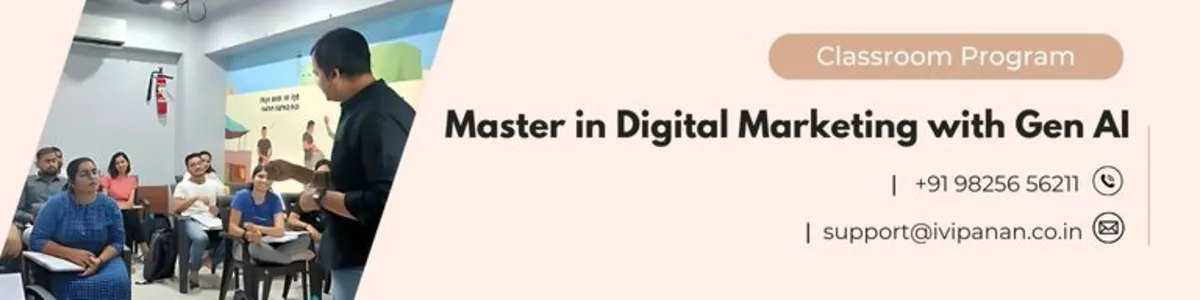
That is exactly why a course like Master in Digital Marketing with Gen AI at iVIPANAN becomes more relevant in this environment because it does not treat an internship as an afterthought.
It allows students to develop industry skills and gain internship experience over 3 to 5 months, and sometimes for up to 1 year, which can strongly support students who need practical experience within university expectations while also preparing for real work in the orange economy.
This is a major advantage for college students.
Instead of doing a disconnected internship just to satisfy a university formality, students can move through a pathway where:
– They learn current digital and Gen AI skills
– They understand how the market actually works
– They gain practical exposure
– They strengthen their portfolio and confidence
– They align better with the creative and digital economy
This is where education becomes useful and not just academic.
Why Digital Marketing is One of the Strongest Gateways to the Orange Economy
Many students think the orange economy is only about animation, gaming or media production.
That is too narrow. Digital marketing is one of the strongest and most accessible gateways into the orange economy because it sits at the intersection of creativity, visibility, communication, audience behaviour and business growth.
A creator needs reach.
A brand needs communication.
A startup needs awareness.
A local business needs discoverability.
An educational institution needs positioning.
An influencer needs content strategy.
A creative economy runs on attention, trust and digital presence.
That is why digital marketing becomes a foundational skill and not a side skill.
And when digital marketing gets blended with Gen AI, content thinking, search understanding and internship exposure, students become far more useful to the industry.
Recently, I was invited as a session chair for the track on the orange economy and creative industry at an international conference hosted by a college.
There was a lot of optimism in the discussions.
Students wanted to know where the future was heading. Academicians were exploring how creativity, innovation and industry are coming closer than ever. The researchers were presenting ideas around media, culture, design, digital ecosystems, and employment opportunities.
After listening to these conversations, I realised India is entering a new phase. Creativity is now becoming a key part of the economy.
This is why the term ‘orange economy’ is getting so much attention today.
The Union Budget 2026–27 gave this shift a big push by proposing AVGC Content Creator Labs in 15,000 secondary schools and 500 colleges to support India’s orange economy.
It also suggested forming a committee to study how AI will affect jobs. It shows the government recognises both the opportunities and challenges ahead.
On paper, the future looks very positive. But from a market point of view, there’s a tougher reality as well.
AI is already taking over many entry-level tasks in content, design, editing, idea generation, and communication. So the real question isn’t whether the orange economy will grow. At present, it looks like it will.
The real question is, will college students or entry-level professionals keep up just by learning tools, apps, and software?
My answer is no. Not anymore.
Anyone who wants a real future in this field needs strong training that blends creativity, digital marketing, strategy, search skills, AI know-how, and real-world experience.
What is the Orange Economy?
The orange economy refers to economic activity generated by creativity, culture, ideas, intellectual property, and original expression. It is often used interchangeably with the term ‘creative economy’.
UNESCO and UN-linked explanations describe it as an evolving economic domain in which creative assets generate value, employment, and growth.
In simple words, the orange economy is where imagination becomes income.
It includes areas such as advertising, media, design, publishing, animation, visual effects, gaming, comics, digital content, creator-led businesses, storytelling, branding, film, music, immersive experiences and several other creativity-led services.
That’s why this idea is so important in today’s India.
We are no longer living in an economy where value comes only from manufacturing or traditional services. Today, ideas, culture, communication and digital creativity also drive business value.
What is the Creative Industry?
If the orange economy is the larger concept, then the creative industry is the real working ecosystem inside it.
Creative industry includes the people, businesses and systems that convert ideas into content, communication, design, experiences and monetisable intellectual property.
This includes:
– Content creators
– Ad agencies
– Video editors
– Designers
– Social media strategists
– Digital marketers
– Animators
– VFX artists
– Gaming professionals
– Writers
– Filmmakers
– Brand storytellers
– Communication specialists
– Creator-led startups
In today’s environment, the creative industry is no longer limited to film or entertainment. It now includes every field where attention, storytelling, communication and digital engagement influence business outcomes.
That’s why digital marketing is now at the heart of this story.
Why is the Orange Economy Suddenly Making Noise in India?
This buzz is not random. It is the result of multiple shifts happening together.
Policy support has become visible
The Government of India has now explicitly linked AVGC expansion with the orange economy. The budget proposal around AVGC Content Creator Labs shows that the government now sees the creative and digital content sectors as serious employment and growth areas.
The creator economy has matured
Businesses, educators, startups, personal brands and even local institutions now need content and visibility regularly. This has increased demand for people who can create, communicate, package and distribute ideas.
Platforms have changed access
Now, a student from anywhere in India can build an audience, create a niche, learn digital skills, and even work in the industry without moving to a big city. That access is real, but access alone is not enough.
What is AVGC and Why Does it Matter
AVGC stands for Animation, Visual Effects, Gaming, and Comics. In policy and industry talks, it’s now expanding to AVGC-XR, where XR means extended reality. Recent government updates include this area in India’s future creative and digital economy plans.
Why does AVGC matter?
Because it represents the convergence of storytelling, visual communication, software, digital production and immersive content creation.
It influences:
– Digital advertising
– Branded video content
– Entertainment
– Gaming
– Virtual learning
– Visual storytelling
– Creator content
– Immersive communication
– Design-led digital engagement
That is why AVGC is not a niche topic. It now affects both the entertainment industry and the broader communication economy.
Let me be very honest here. The overall picture looks positive. Government support is increasing. Creative industries are getting legitimacy, and institutions are becoming more open to industry-linked learning.
Students feel excited about working in the digital and creative sectors. All of that is good.
But this optimism is incomplete if we ignore the AI disruption already underway beneath the surface.
Many entry-level tasks are no longer protected. Basic caption writing, first-draft copywriting, elementary design ideation, visual mockups, transcription, summarisation, rough scripting and entry-level content structuring are now handled faster by AI-assisted workflows.
That means the market has changed. It is no longer enough to be someone who simply knows how to use a tool.
The World Economic Forum has said that 40% of employers expect workforce reduction where AI can automate tasks, even as technology also creates new roles and changes skill demand.
So if the orange economy is rising, but AI is simultaneously compressing entry-level work, then the answer cannot be shallow software learning.
The answer has to be deeper capability building.
Why Learning Only Tools, Apps and Software Will Not Help For Long
This is one of the biggest misunderstandings among students today. Many think that learning a few apps means becoming industry-ready.
It does not because tools are becoming easier every quarter. AI is reducing the effort needed for mechanical execution.
Templates are everywhere, prompts are everywhere, and automation is everywhere.
So what remains valuable? Human judgement, strategic thinking, creative direction, audience understanding, search awareness, brand sense, communication logic and business relevance.
That is why the market is slowly dividing learners into two groups.
The first group only knows tools, and the second group understands how to use tools inside a larger framework of strategy, communication and execution.
The second group will survive and grow.
The first group will always remain vulnerable.
The NEP 2020 and Internship Reality College Students Must Understand
This is where the issue becomes even more relevant for college students.
Under NEP 2020-aligned higher education reforms, UGC has increasingly pushed undergraduate programmes towards internship, apprenticeship, work-based learning and experiential exposure.
UGC’s internship guidelines say that, in an internship course, students are required to participate in work experience or professional activity with an external entity. The undergraduate curriculum framework also provides for internship, apprenticeship and work-based vocational education, including summer-term execution and credit linkage.
Now this sounds excellent in principle, but in practical terms, cities like Surat face a real challenge.
Not every student gets access to structured, meaningful, industry-relevant internship opportunities.
Many students are asked by universities to complete internship components, but the market around them may not offer enough serious openings, especially ones that actually build capability instead of just giving a certificate.
This is where students get stuck. They need internship exposure as part of their academic journey, and they also need employable skills.
But local ecosystems do not always provide both together in a structured way. That gap creates a very important opportunity.
Why a Professional Training Plus Internship Model Becomes a Practical Solution
For college students, especially in emerging cities and regional education hubs, the smartest path is no longer just finding any internship.
The smarter path is finding a structured learning model that gives both skill development and internship exposure together.
That is exactly why a course like Master in Digital Marketing with Gen AI at iVIPANAN becomes more relevant in this environment because it does not treat an internship as an afterthought.
It allows students to develop industry skills and gain internship experience over 3 to 5 months, and sometimes for up to 1 year, which can strongly support students who need practical experience within university expectations while also preparing for real work in the orange economy.
This is a major advantage for college students.
Instead of doing a disconnected internship just to satisfy a university formality, students can move through a pathway where:
– They learn current digital and Gen AI skills
– They understand how the market actually works
– They gain practical exposure
– They strengthen their portfolio and confidence
– They align better with the creative and digital economy
This is where education becomes useful and not just academic.
Why Digital Marketing is One of the Strongest Gateways to the Orange Economy
Many students think the orange economy is only about animation, gaming or media production.
That is too narrow. Digital marketing is one of the strongest and most accessible gateways into the orange economy because it sits at the intersection of creativity, visibility, communication, audience behaviour and business growth.
A creator needs reach.
A brand needs communication.
A startup needs awareness.
A local business needs discoverability.
An educational institution needs positioning.
An influencer needs content strategy.
A creative economy runs on attention, trust and digital presence.
That is why digital marketing becomes a foundational skill and not a side skill.
And when digital marketing gets blended with Gen AI, content thinking, search understanding and internship exposure, students become far more useful to the industry.