
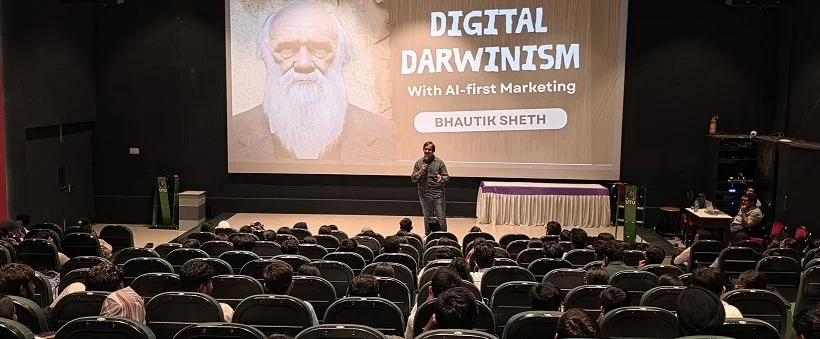
B.V. Patel Institute of Commerce and Management at Uka Tarsadia University invited Bhautik Sheth to conduct a session for newly admitted BBA and B.Com students on Digital Literacy.
The session focused on how students must prepare for a fast-changing digital world in which technology, platforms, careers, and business expectations continue to evolve rapidly.
While the session title was Digital Literacy, the discussion went deeper into the larger idea of how individuals, businesses, and institutions must keep adapting to survive and grow in the AI-driven age.
Addressing the students, Bhautik Sheth explained that the past 25 years have changed how people communicate, learn, buy, sell, work, and build careers.
From the early internet era to social media, smartphones, digital payments, e-commerce, automation, and now artificial intelligence, every wave of technology has changed the expectations from students and professionals.
He said that the coming years will demand more than basic digital usage. Students will need digital understanding, digital discipline, and the ability to keep learning continuously.
How Technology Has Changed The Meaning Of Career Readiness?
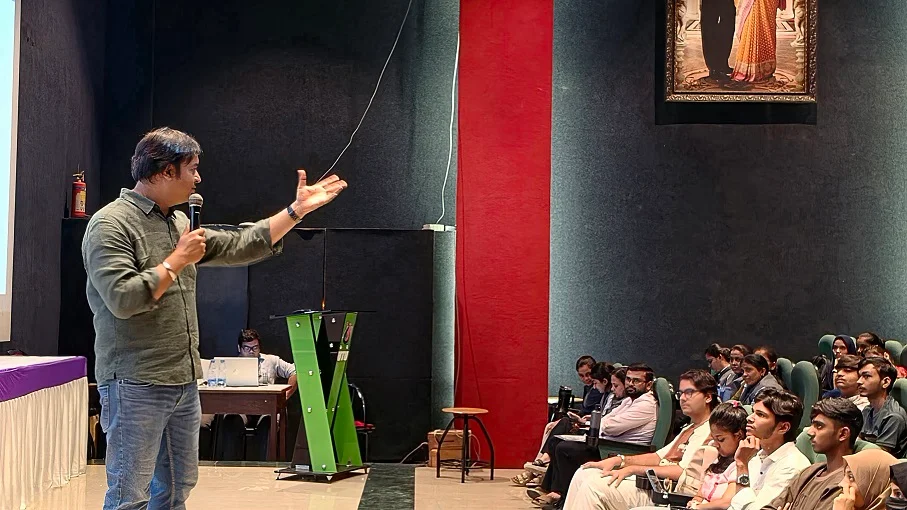
Bhautik Sheth explained that career readiness no longer means only completing a degree and preparing for interviews.
A degree gives students academic knowledge, structure, and a strong foundation. However, the modern workplace expects students to combine that foundation with practical digital skills gained during their internship.
He highlighted that academia remains extremely important because it builds thinking, discipline, conceptual clarity, and subject knowledge.
At the same time, AI-driven digital skills help students apply that knowledge in the real world.
The point was not to create a conflict between formal education and digital skills. The message was exactly the opposite. Students need both!
A commerce student who understands accounting, finance, marketing, economics, or business management will gain a stronger advantage when they also understand spreadsheets, digital research, data interpretation, AI tools, online communication, digital marketing basics, and responsible use of technology.
In the current environment, knowledge gives direction and digital skills give speed.
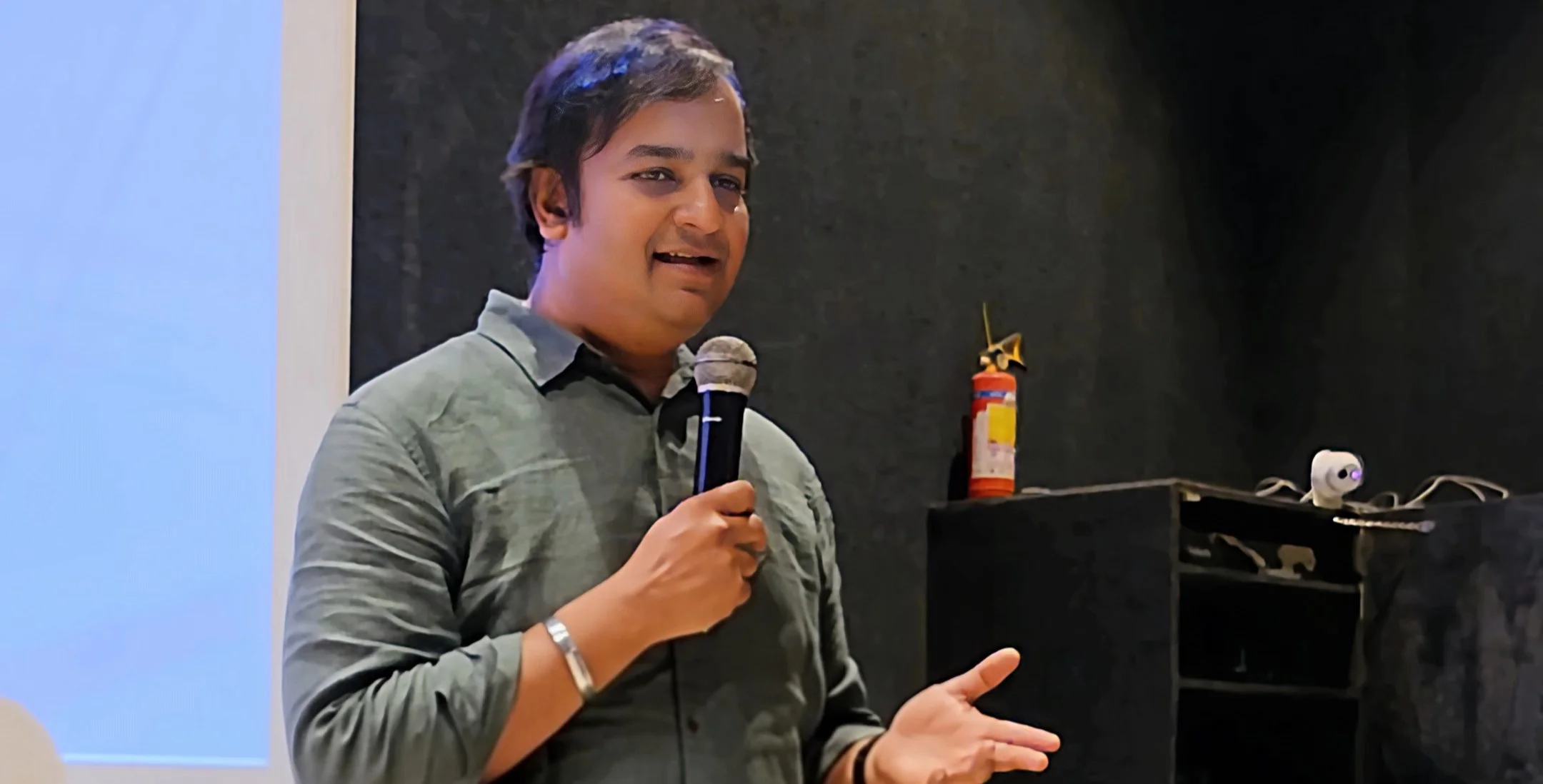
Realise That AI Is Powerful But Also Volatile
The session also covered the growing role of AI. Bhautik Sheth explained that AI has become one of the most powerful technological shifts of this generation, but it is also volatile and difficult to judge.
Many students and professionals feel excited when they see AI tools creating content, designs, summaries, presentations, reports, and ideas within seconds.
This excitement is natural. However, the real challenge lies in understanding how to use AI responsibly and meaningfully.
AI tools will keep changing. Platforms that feel dominant today may change tomorrow.
New tools will arrive. Existing tools will improve. Some tools may disappear. This is why students should not build their future around one specific AI tool.
They should build their future around learning ability, problem-solving ability, judgement, and adaptability.
AI can help with speed, but it cannot replace clear thinking. It can generate a draft, but it cannot understand context unless a human guides it. It can produce information, but students must still learn how to verify, interpret, and apply that information.
This is where digital literacy becomes critical. Digital literacy does not mean using social media or knowing a few apps. It means understanding how to use digital tools with purpose, ethics, awareness, and judgement.
The Lessons From Brands That Adapted And Those That Did Not
During the session, Bhautik Sheth shared examples of brands that struggled because they could not adapt to technological change at the right time.
Kodak once had a strong position in photography, yet the company could not fully capitalise on the digital photography shift.
Nokia dominated the mobile phone market for years, but the smartphone revolution changed the game faster than the company could respond.
These examples show that past success does not guarantee future relevance. A strong history cannot protect a brand if it stops adapting.
On the other side, brands like Canon, Samsung, and Lenskart show how adaptation can create long-term growth. Canon continued to evolve with changing imaging technology. Samsung kept adapting in the smartphone market by responding to consumer expectations, product innovation, and market shifts. Lenskart used technology to transform eyewear buying by combining digital convenience, customer experience, and retail innovation.
The larger lesson for students was simple. If large brands can lose relevance by missing technological shifts, individuals can also fall behind if they stop learning.
Technology rewards those who keep evolving.
Microsoft Excel Teaches The Lesson That Tools Need Practice
Bhautik Sheth also used Microsoft Excel as an example to explain why digital literacy cannot remain superficial.
Excel has existed for more than 30 years. It is one of the most commonly used tools in offices, businesses, accounts departments, sales teams, marketing teams, and management roles. Yet many people still struggle to use it effectively.
This example helped students understand one important truth. A tool becoming old does not automatically make people skilled at it. Skill comes from learning, practice, and application.
The same principle applies to AI. Just because AI tools are available does not mean everyone will use them well.
Some people will use AI only as a shortcut. Some will copy and paste without thinking. Some will create average work faster. But those who understand concepts, context, and application will use AI to improve productivity and quality.
In the workplace, the difference will not come from access to tools. Almost everyone will have access. The difference will come from how well a person can use those tools.
Digital Literacy Is Not Social Media Usage
One important point of the session was the distinction between digital usage and digital literacy.
Many young people spend several hours on social media platforms. They know how to scroll, post, share, edit, and follow trends. However, that does not automatically make them digitally literate.
Digital literacy means much more.
It means knowing how to search for reliable information. It means verifying facts before believing or sharing them. It means understanding privacy, data, and digital footprints. It means using digital tools for productivity, communication, research, learning, and problem-solving.
For commerce and management students, digital literacy also means understanding how technology affects business.
It means knowing how customers discover brands online, how businesses use data, how digital payments work, how online reputation influences trust, and how AI will reshape decision-making.
The digital world is not only an entertainment space. It is now a career space, a business space, and a learning space.
Students Must Learn To Adapt Gradually
Bhautik Sheth encouraged students not to feel overwhelmed by the speed of change. The aim is not to master everything at once. The aim is to build a habit of gradual adoption.
Students can start with basic productivity tools. They can improve their command over Excel, presentations, online research, email writing, and digital documentation. Then they can move towards AI tools, data interpretation, digital marketing basics, content creation, and professional communication.
This gradual learning approach protects students from confusion. It also helps them build real confidence.
The future workplace will value students who can learn fast, adapt quickly, communicate clearly, and use technology responsibly.
These qualities will matter across industries, whether students enter finance, marketing, operations, entrepreneurship, family business, or corporate roles.
Academia Builds The Foundation, And Digital Skills Build The Edge

A key message of the session was that formal education and digital skills must not be seen separately.
Academia gives students conceptual depth, and digital skills help them apply that depth in modern situations. Academics who are aligned with this kind of academia-industry association will be ahead of the curve.
A B.Com student with strong accounting knowledge and good Excel skills becomes more useful. A BBA student with marketing fundamentals and digital communication skills becomes more employable. A student with business knowledge and AI literacy becomes better prepared for future roles.
The right combination matters.
Students should not treat digital skills as optional extra learning. They should treat them as career infrastructure. Just as reading, writing, and communication became basic career skills in earlier times, digital literacy has now become a basic requirement for professional growth.
The Session Ended With An Important Career Message
The session concluded with an interactive discussion where students asked questions related to AI, digital marketing, career opportunities, and the skills needed for the future.
Bhautik Sheth urged students to remain curious, disciplined, and open to change. He explained that the world will continue to evolve, and no one can completely predict which tools or platforms will dominate the future.
To develop industry-relevant digital skills beyond classroom learning, students can explore the expert-led training programs and digital marketing resources offered by iVIPANAN, designed to prepare learners for real-world careers in the digital age.
The final message was clear. Technology will keep changing. AI will keep evolving. Careers will keep transforming. Students who develop digital literacy early will not only survive this change but also grow through it.
Key Takeaways From The Session
- Digital literacy is now a basic career skill and not an optional advantage.
- Academic knowledge gives students a foundation, but digital skills help them apply that knowledge in the real world.
- AI is powerful, but students must use it with judgement, responsibility, and context.
- One tool or one platform cannot define the future. Learning ability and adaptability matter more.
- Social media usage is not the same as digital literacy.
- MS Excel remains a strong example of why tools need practice, even after decades of existence.
- Brands and individuals both need to keep adapting to stay relevant.
- Students who start learning digital skills early will gain a clear advantage in their careers.
The session was part of the university’s orientation program ‘Aavkar’. Under the leadership of the institute’s Director, Dr Vijay Gondaliya, and his team, the session proved fruitful for the students.